
What Is SIP and How Does It Work in India? The Complete Beginner’s Guide
Rupee cost averaging explained with Indian market dips, setting up NACH mandates, and why consistency beats timing every single decade.
Demystifying Systematic Investment Plans (SIP), NAV mechanics, active vs passive index investing, expense ratios, and asset allocation for Indian wealth builders. Jargon-free, unbiased education.
Rupee cost averaging explained with Indian market dips, setting up NACH mandates, and why consistency beats timing every single decade.
Market timing fallacies, deploying annual Diwali bonuses via STP (Systematic Transfer Plan), and mathematical comparisons during bull runs.
How a seemingly small 1% distributor commission silently eats up to 25% of your final 25-year retirement nest egg. Switch...
Passive index tracking vs active fund manager alpha: why 72% of large-cap active fund managers in India fail to beat...
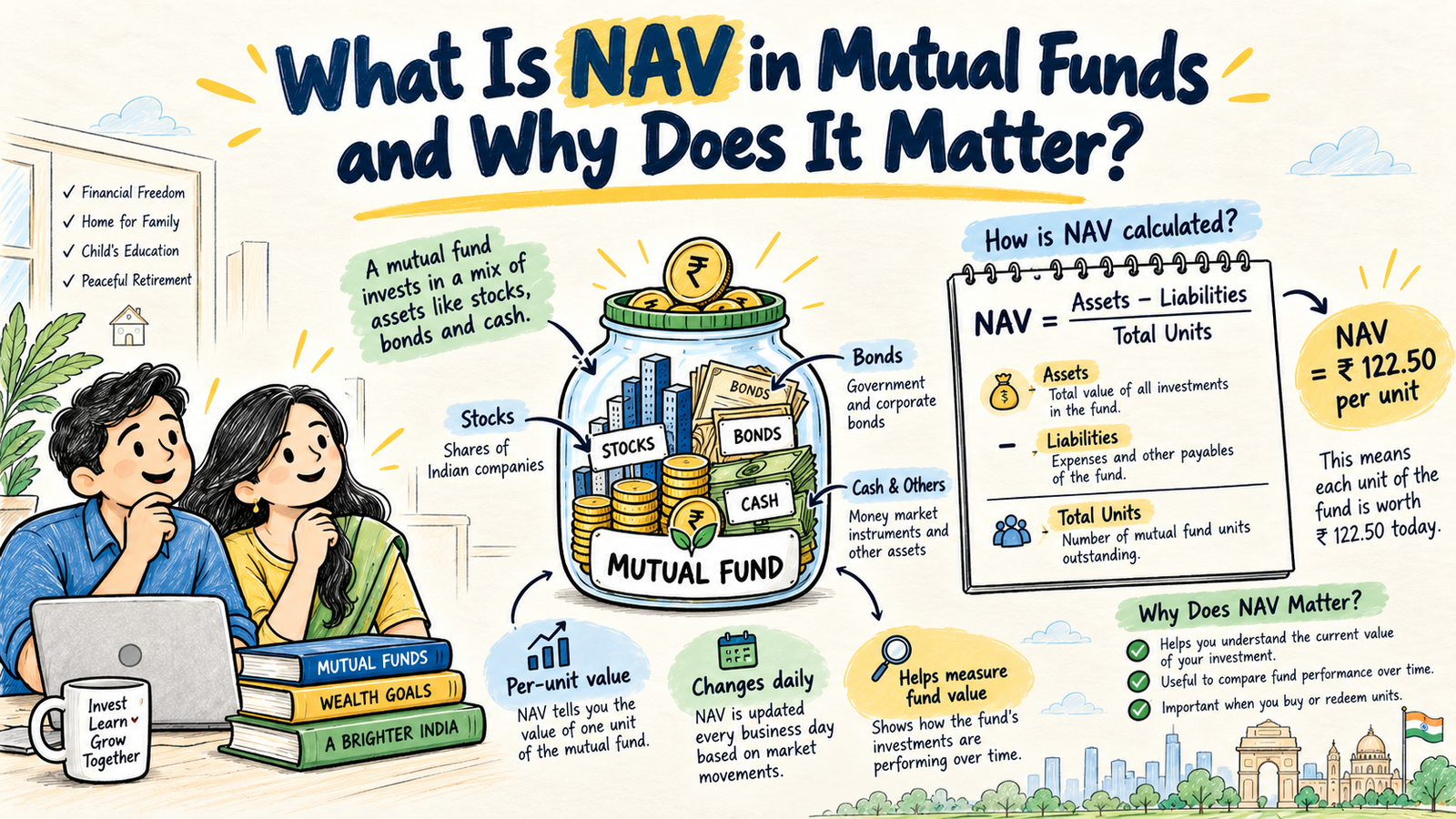
Debunking the ₹10 NFO myth: why a fund with ₹1,200 NAV is NOT expensive, and how unit allotments work on...
Corporate bond funds, treasury bills, and modified duration vs equity volatility. How to balance your portfolio according to life stages.
Investing ₹15,000 per month for 15 years at an expected 15% CAGR results in approximately ₹1 Crore accumulated corpus. Of this, your own capital invested is only ₹27 Lakhs, while compound interest contributes ₹73 Lakhs.
Every Saturday: Mutual fund portfolios, expense ratio audits, and SIP discipline in plain language. Zero commission, zero fund sponsorships.
No spam. Strictly educational insights. Unsubscribe in one click.